Brands & organizations
Logo pins, membership identifiers, staff pieces, donor gifts, and organization merchandise that need dependable color and a recognizable metal outline.

Custom enamel pins
Compare hard enamel’s smooth polished face with soft enamel’s raised metal and recessed color, then refine the size, plating, attachments, and presentation.
Request an Enamel Pin Quote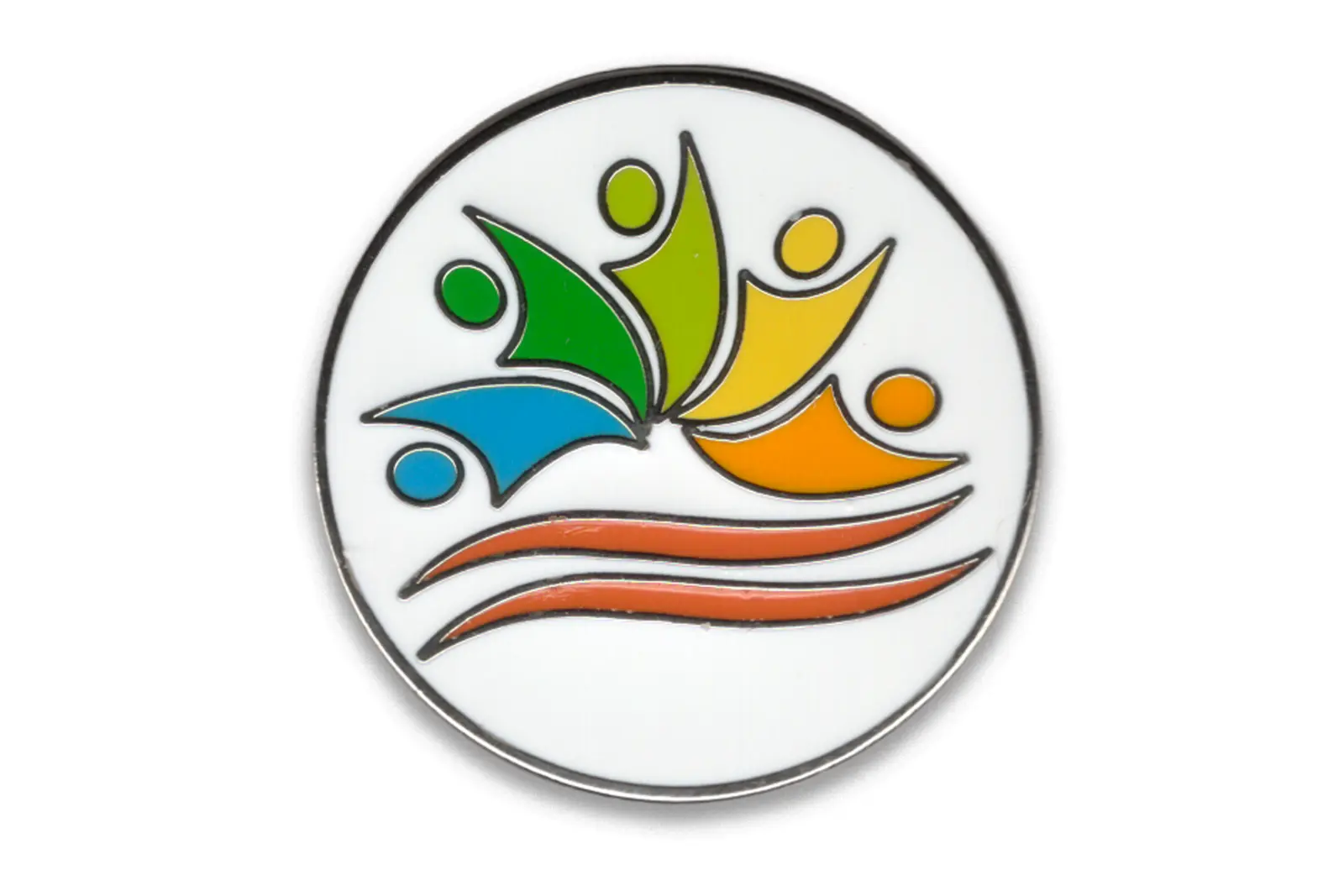
Hard enamel vs. soft enamel
Where enamel pins fit
Hard and soft enamel can carry the same logo or illustration, but the polished surface, tactile depth, presentation, and budget create noticeably different objects.
Logo pins, membership identifiers, staff pieces, donor gifts, and organization merchandise that need dependable color and a recognizable metal outline.
Service pins, officer pieces, awards, commemoratives, and formal gifts where plating, surface, packaging, and perceived finish matter.
Collectible releases, conference pins, event sets, fundraising pieces, artist merchandise, and trading programs with coordinated versions or backing cards.
Designing for enamel
Enamel pins translate artwork into metal outlines and filled color areas. Very small gaps, thin lettering, narrow channels, and unrestricted gradients may not reproduce cleanly, so the design is evaluated at the intended finished size.
The hard-versus-soft decision comes after the artwork and purpose are understood. Hard enamel favors a level, polished face; soft enamel emphasizes raised metal and recessed color. Neither construction should be selected from the name alone.
From idea to delivery
The process can begin with finished artwork, a rough sketch, a prior item, or a written concept.
Tell us whether the pin will be worn, awarded, traded, sold, or presented, along with quantity, target size, need-by date, and artwork.
We evaluate the artwork and recommend hard or soft enamel, plating, posts, and finishing around the desired appearance and budget.
Review spelling, dimensions, metal lines, colors, plating, attachments, back details, and packaging before authorizing the design.
Written approval releases the documented pin to production. Finished pieces are checked against the approved proof before shipment.
Representative finishes
Use these examples to compare overall character, then open the exact construction page for deeper hard- or soft-enamel guidance. View the project gallery.
Level enamel and polished metal support clean logos, formal recognition, retail pins, and pieces meant to feel jewelry-like.

Recessed color emphasizes outlines and texture, making soft enamel useful for bold collectibles, trading pins, and dimensional artwork.
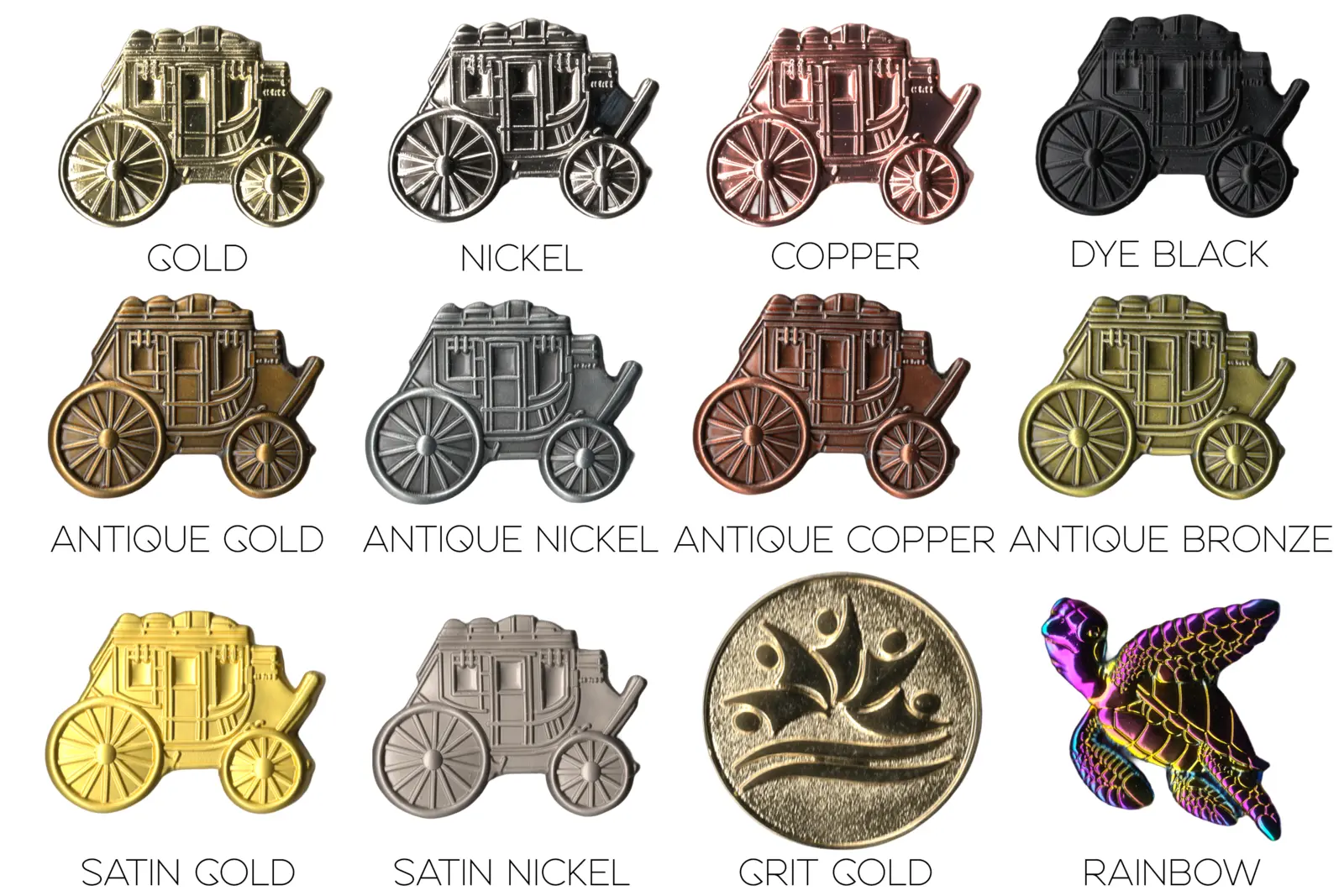
Bright plating feels crisp, antique finishes deepen relief, black nickel sharpens contrast, and satin metal softens reflection.
Questions before you begin
For payment, shipping, reorders, samples, and general policies, visit the full FAQ.
Choose hard enamel when a smooth, polished face best suits the brand or presentation. Choose soft enamel when raised metal, tactile depth, or a more dimensional collectible feel supports the artwork. We can recommend the better fit after reviewing the design and use.
Traditional enamel uses distinct color areas separated by metal, so unrestricted gradients and photographic detail are not its strength. Printed details, acrylic, or another construction may be more suitable when continuous color is essential.
The practical color count depends on pin size, the number and shape of the filled areas, required metal divisions, and the selected manufacturing method. The proof confirms the color plan before production.
Small balanced pins often use one post. Wider, heavier, or asymmetrical pins may use two to prevent rotation. Post placement is shown on the proof and considered with comfort and how the pin will be worn.
Yes. Coordinated versions may change approved enamel colors, metal finish, back stamp, numbering, or presentation. There are no minimum purchase requirements, and pricing is confirmed for each version and quantity.
Start with the artwork
Share the artwork, use, quantity, target size, need-by date, and preferred feel. We will help compare hard and soft enamel and prepare a tailored quote.
Request an Enamel Pin Quote →